UI/UX Design Services That Increase Conversions
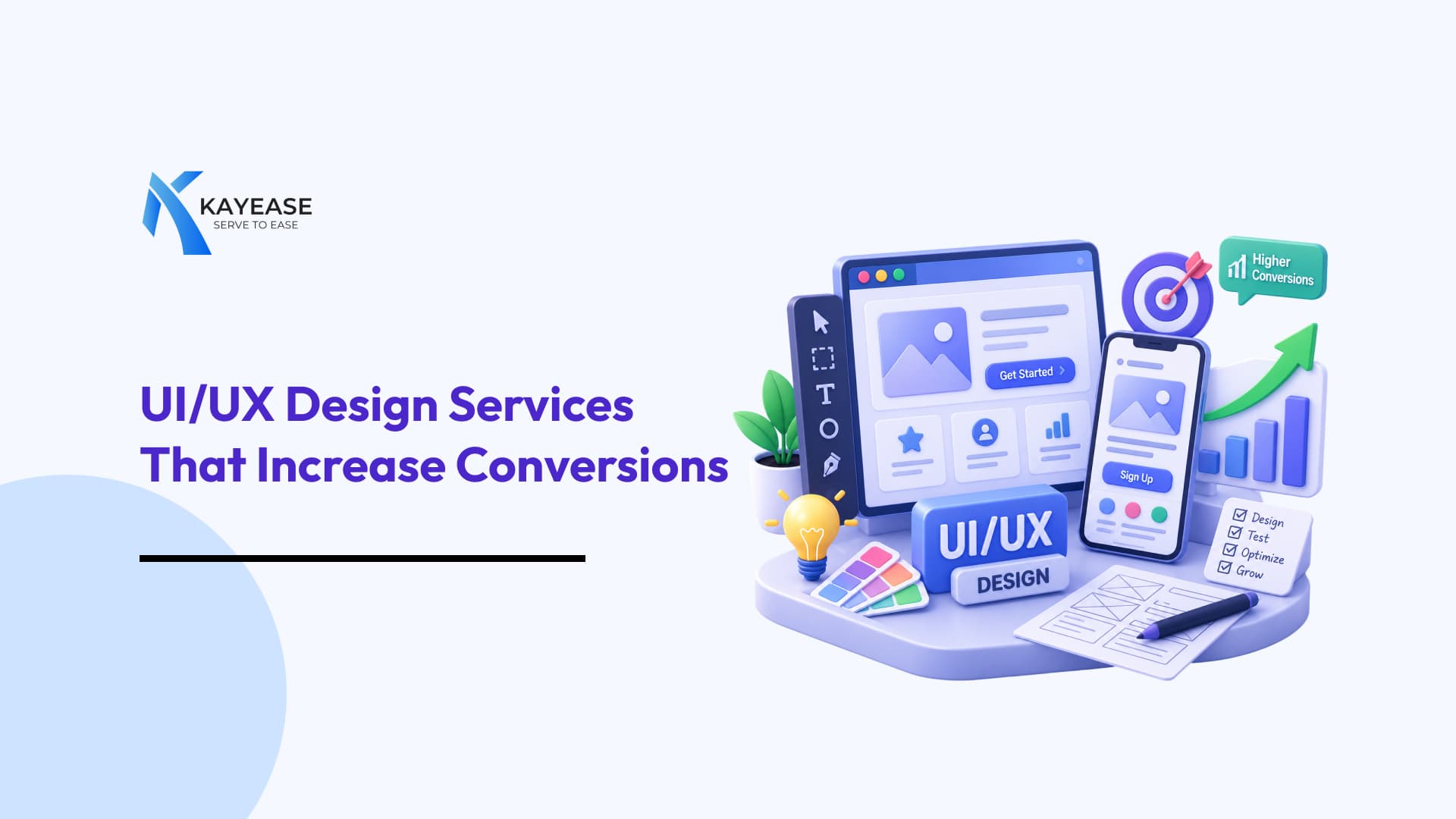
Discover how conversion-focused UI/UX design improves user experience, builds trust, reduces friction, and helps businesses turn more website visitors into customers.
UI/UX Design Services That Increase Conversions
A beautiful website or app is great, but a beautiful design alone doesn’t guarantee conversions.
If visitors struggle to find information, understand your services, navigate your website, or complete a purchase, they may simply leave. This is where effective UI/UX design services make a difference.
Good UI/UX design is not just about colors, layouts, and attractive screens. It is about creating a digital experience that helps users move from “I’m interested” to “I want this” to “I’ll take action.”
What Are UI/UX Design Services?
UI stands for User Interface, while UX stands for User Experience.
UI focuses on how a digital product looks and feels, including typography, colors, buttons, layouts, icons, and visual elements. UX focuses on how the product works and how easily users can accomplish their goals.
Professional UI/UX design services combine both to create digital experiences that are visually appealing, intuitive, accessible, and conversion-focused.
How UI/UX Design Can Increase Conversions
1. Simplifies Website Navigation
Users should not have to search through multiple pages to find what they need.
A well-structured navigation system makes important information easy to discover. Clear menus, logical page structures, descriptive labels, and strategically placed links can reduce confusion and help users reach conversion points faster.
For example, an e-commerce website should make it simple for customers to move from:
Product → Details → Add to Cart → Checkout
The fewer unnecessary obstacles users encounter, the easier it becomes for them to complete an action.
2. Create Clear Calls-to-Action
A call-to-action tells users what to do next.
Examples include:
- Get Started
- Book a Demo
- Request a Quote
- Buy Now
- Contact Us
- Download Now
Effective UI/UX design makes CTAs noticeable without making the interface feel overwhelming.
A good CTA should have a clear purpose, understandable wording, and a logical position within the user journey.
3. Improves Mobile Experiences
A large portion of website traffic comes from smartphones. A website that looks excellent on desktop but is difficult to use on mobile can quickly lose potential customers.
Responsive UI/UX design ensures that:
- Buttons are easy to tap
- Text remains readable
- Forms are simple to complete
- Images adapt to smaller screens
- Navigation works smoothly
- Pages load efficiently
A mobile-friendly experience can help businesses retain users and improve conversion opportunities.
4. Reduces Friction in Forms and Checkout
Long forms and complicated checkout processes can discourage users from completing an action.
UX designers analyze every step and identify unnecessary fields, confusing instructions, and avoidable steps. Instead of asking for everything at once, businesses can use shorter forms, clear labels, helpful error messages, and simplified checkout flows.
The goal is simple: make completing the action feel effortless.
5. Builds Trust Through Design
Users make quick judgments about digital products. An outdated or confusing website can make a business appear less trustworthy, even when its actual products or services are excellent.
Professional UI design can strengthen credibility through:
- Consistent branding
- Clean layouts
- Professional typography
- Customer reviews
- Trust signals
- Clear pricing
- Secure checkout indicators
- High-quality visuals
When users feel comfortable and confident, they are more likely to take the next step.
6. Uses UX Research to Understand Users
Effective UI/UX design should not rely entirely on assumptions.
UX research can help businesses understand:
- Who their users are
- What users are looking for
- Where users face difficulties
- Why visitors abandon pages
- Which features users value
- What prevents conversions
Methods such as user interviews, usability testing, competitor analysis, heatmaps, and analytics can reveal opportunities for improvement.
7. Creates Personalized User Journeys
Not every visitor arrives with the same goal.
A first-time visitor may need educational content, while an existing customer may want quick access to their account or support.
UI/UX design can create clearer user journeys based on different audiences and goals.
For example, a SaaS website might guide users through:
Discover → Explore Features → Compare Plans → Start Free Trial
Designing around these journeys helps users understand what to do next instead of leaving them to figure it out themselves.
UI/UX Design Services Businesses Can Invest In
Depending on your business requirements, professional UI/UX agencies or design teams may offer services such as:
- UX research and user analysis
- Website UI/UX design
- Mobile app design
- SaaS product design
- E-commerce UX design
- Wireframing
- Prototyping
- Design systems
- Usability testing
- Conversion-focused landing page design
- UX audits
- Responsive web design
- User journey mapping
Each service can address a different part of the customer experience.
Why Businesses Should Think Beyond “Good-Looking Design”
One of the biggest UI/UX mistakes businesses make is treating design as decoration.
A website can have impressive animations, beautiful colors, and modern graphics but still perform poorly if users cannot easily accomplish what they came to do.
Conversion-focused design asks better questions:
Can users find what they need?
Do they understand the value being offered?
Is the next step obvious?
Is the checkout or signup process easy?
Does the experience create trust?
These questions turn UI/UX from a visual exercise into a business strategy.
How to Measure Whether Your UI/UX Is Working
A successful redesign should ultimately be measured by user behavior and business results.
Important metrics can include:
- Conversion rate
- Bounce rate
- Average session duration
- Cart abandonment rate
- Form completion rate
- Sign-up rate
- User retention
- Task completion rate
For example, if a redesigned checkout increases completed purchases while reducing abandonment, the design is contributing directly to business growth.
Final Thoughts
Great UI/UX design is about more than making a website or application look modern.
It is about understanding users, removing friction, building trust, and guiding people toward meaningful actions.
Whether you are launching a new website, improving an existing e-commerce store, or developing a SaaS product, investing in professional UI/UX design services can create a smoother customer journey and ultimately support higher conversions.
The best digital experiences don't make users think about the design. They simply make it easier for users to say yes.
Never miss a post
Subscribe to our RSS feed and every new article lands in your reader automatically — no email, no algorithm.
Works with Feedly, Inoreader, NetNewsWire and any other reader. View raw feed