Technology Trends Every Business Should Know.
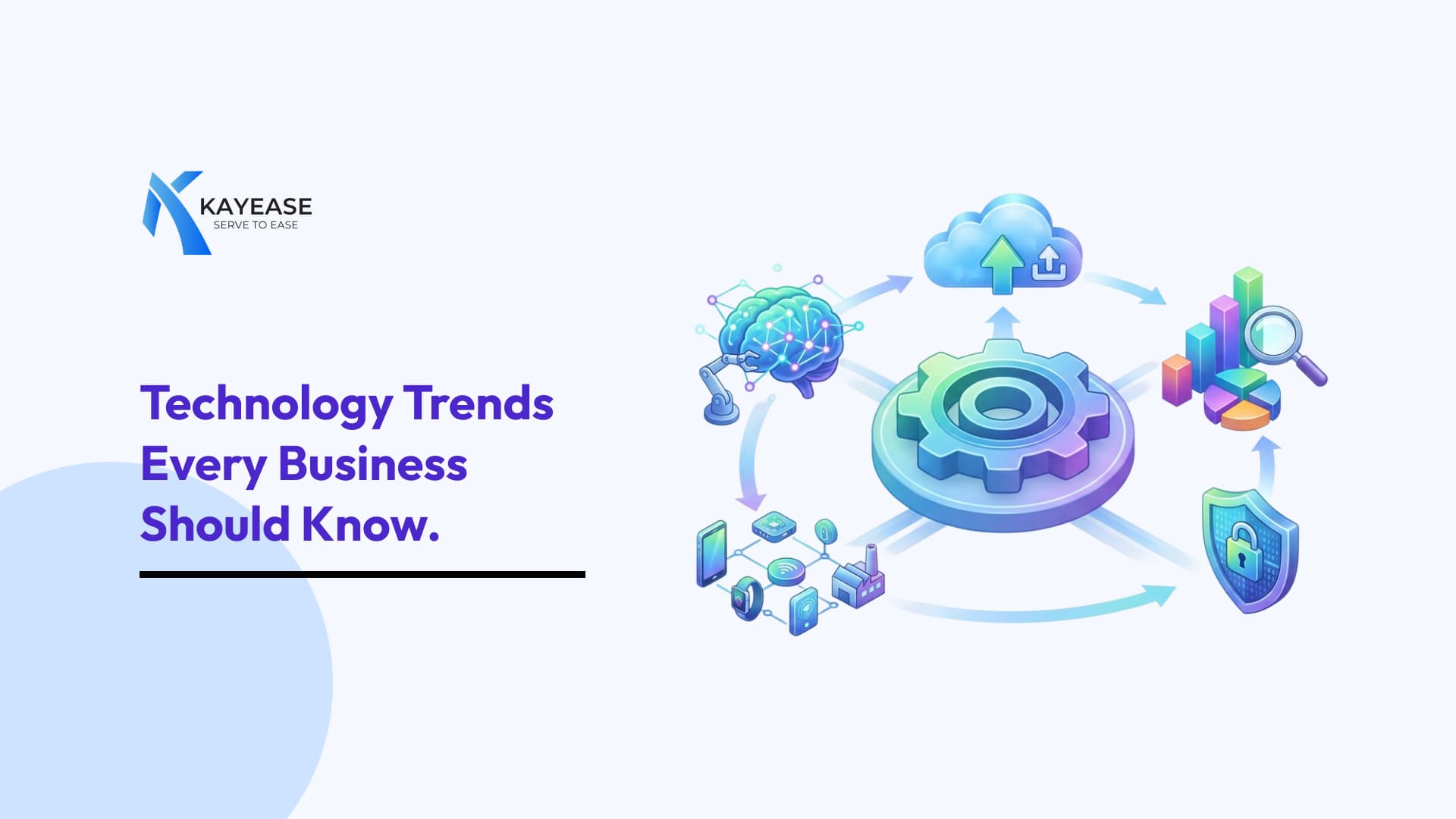
Technology is changing how businesses operate, communicate and grow. Discover the latest technology trends every business should know, including artificial intelligence, automation, cloud computing, cybersecurity and data analytics.
Technology Trends Every Business Should Know
Introduction
Technology is no longer just a tool that helps businesses complete everyday tasks. It has become an important part of how companies communicate, serve customers, manage operations and compete in the market.
From artificial intelligence to automated workflows, digital innovation is changing the way businesses work. Companies that understand and adopt the right technologies can improve productivity, make better decisions and create more convenient customer experiences.But what are the technology trends every business should know? Which innovations are worth investing in, and how can businesses use them to stay competitive?
Whether you're running a startup, managing a growing company or leading an established organisation, understanding emerging technology can help you prepare for the future.
Let's explore the key technology trends shaping businesses in 2026 and beyond.
1. Artificial Intelligence Is Transforming Business Operations
Artificial Intelligence (AI) is one of the most influential technology trends every business should know.
AI helps businesses analyse information, generate content, understand customer behaviour and automate repetitive tasks. It is increasingly becoming part of everyday business operations.
How businesses can use AI:
- Generate marketing ideas and content.
- Analyse customer feedback.
- Improve customer support.
- Automate repetitive administrative tasks.
- Assist with business forecasting.
- Personalise customer experiences.
For example, an online business can use AI-powered tools to answer common customer questions, recommend relevant products and analyse purchasing patterns.
The goal is not to replace every human task with AI. It is to help employees spend less time on repetitive work and more time on creative thinking, problem-solving and decision-making.
2. Automation Is Making Businesses More Efficient
Time is valuable in every business. Managing repetitive tasks manually can slow down operations and increase the chances of human error.
Business automation uses software and digital tools to complete routine activities with minimal manual intervention.
Examples of business automation include:
- Automated email responses.
- Invoice generation and payment reminders.
- Customer relationship management (CRM).
- Appointment scheduling.
- Inventory updates.
- Automated reporting.
Imagine a business receiving hundreds of customer enquiries every week. Instead of manually managing every interaction, automated systems can organise enquiries, send initial responses and direct customers to the appropriate team.
Automation allows businesses to improve workflow efficiency while giving employees more time to focus on important responsibilities.
3. Cloud Computing Is Changing How Businesses Work
Cloud computing allows businesses to access software, storage and computing resources through the internet instead of depending entirely on physical infrastructure.
It has made collaboration and remote working more convenient.
Why businesses are adopting cloud technology:
- Access files from different locations.
- Collaborate with teams in real time.
- Reduce dependence on local storage.
- Scale resources as business requirements change.
- Support remote and hybrid working environments.
For example, a team working from different cities can use cloud-based platforms to share documents, manage projects and communicate without being in the same office.
Businesses should also consider data security, access permissions, backup systems and cloud costs before selecting a provider.
4. Cybersecurity Is Becoming a Business Priority
As businesses become more digital, protecting information is more important than ever.
Cybersecurity focuses on protecting systems, networks, applications and sensitive information from digital threats.
Small businesses are also potential targets for cyberattacks, making security an important consideration regardless of company size.
Important cybersecurity practices include:
- Using strong and unique passwords.
- Enabling multi-factor authentication.
- Updating software regularly.
- Training employees to recognise phishing attempts.
- Backing up important business data.
- Restricting access to sensitive information.
Businesses using AI tools should also establish clear rules about sharing confidential information and handling customer data.
Investing in cybersecurity helps build trust with customers, employees and business partners.
5. Data Analytics Is Helping Businesses Make Smarter Decisions
Every business generates information through sales, customer interactions, marketing campaigns and daily operations.
Data analytics helps turn this information into useful insights.
Instead of making decisions based only on assumptions, businesses can use data to understand what is working and where improvements are needed.
How businesses can use data analytics:
- Understand customer preferences.
- Monitor sales performance.
- Measure marketing campaign results.
- Identify purchasing patterns.
- Track website traffic.
- Improve inventory planning.
For example, an online store can analyse which products receive the most views, which campaigns generate sales and where customers leave the purchasing process.
These insights can help businesses improve their strategies and make more informed decisions.
6. AI Agents Are Taking Automation Further
Traditional automation generally follows predefined instructions. AI agents are designed to work towards a goal by interpreting information, planning steps and carrying out certain tasks with varying levels of independence.
This is an emerging development in business technology.
Potential business applications include:
- Organising customer enquiries.
- Assisting with research.
- Preparing reports.
- Supporting sales workflows.
- Coordinating repetitive administrative activities.
- Helping employees find relevant information.
For example, an AI agent could help a sales team organise incoming leads, summarise customer interactions and prepare follow-up suggestions.
However, businesses should define permissions, monitor performance and require human approval for important decisions.
AI agents should be introduced gradually, starting with clearly defined tasks where their results can be checked.
7. Mobile-First Technology Is Improving Customer Experiences
Customers increasingly interact with businesses through smartphones.
Whether they are browsing products, booking appointments, making payments or contacting support, mobile convenience plays an important role in the customer experience.
Businesses should consider:
- Mobile-friendly websites.
- Responsive website layouts.
- Easy navigation.
- Secure online payments.
- Fast-loading pages.
- Convenient customer support.
A website that works perfectly on a desktop but is difficult to use on a smartphone can result in missed opportunities.
Mobile-first design helps businesses make their digital services more accessible and convenient.
8. Digital Payments Are Making Transactions Easier
Digital payments have changed how businesses receive and manage money.
Customers now expect convenient payment options, particularly when shopping online or using digital services.
Businesses can explore:
- UPI payments.
- QR code payments.
- Digital wallets.
- Online payment gateways.
- Contactless payment options.
- Automated payment notifications.
For businesses in India, UPI has become an important part of everyday digital transactions.
Offering secure and convenient payment methods can reduce friction during checkout and improve the purchasing experience.
9. Personalisation Is Becoming Important for Customer Engagement
Customers appreciate experiences that match their interests and requirements.
Personalisation uses customer information, preferences and behaviour to deliver more relevant communication, recommendations and services.
Examples include:
- Personalised product recommendations.
- Relevant email campaigns.
- Tailored customer offers.
- Customised website experiences.
- Targeted marketing communication.
For example, an online store can recommend products based on a customer's previous browsing or purchasing activity.
However, businesses must use customer information responsibly, respect privacy preferences and follow applicable data protection requirements.
10. Internet of Things (IoT) Is Connecting Business Operations
The Internet of Things (IoT) refers to physical devices connected to the internet that collect and exchange information.
These devices can help businesses monitor operations, track assets and improve efficiency.
Business applications include:
- Smart inventory tracking.
- Connected manufacturing equipment.
- Temperature monitoring.
- Fleet tracking.
- Smart office systems.
- Equipment maintenance alerts.
For example, a logistics company can use connected tracking devices to monitor the location and condition of goods during transportation.
IoT can provide useful real-time information, but businesses should also consider device security, connectivity and maintenance costs.
11. Sustainable Technology Is Gaining Business Attention
Sustainability is becoming an important consideration in business planning.
Companies are exploring technologies that help reduce energy consumption, improve resource management and minimise operational waste.
Examples include:
- Energy-efficient systems.
- Smart energy monitoring.
- Digital documentation.
- Optimised logistics.
- Renewable energy management.
- Efficient cloud infrastructure.
Sustainable technology can support environmental goals while helping businesses identify opportunities to use resources more efficiently.
How Can Businesses Start Adopting New Technology?
Understanding technology trends every business should know is only the first step. The real value comes from choosing solutions that address actual business problems.
Here are some practical steps:
1. Identify Business Challenges: Understand which tasks are consuming time or creating operational difficulties.
2. Set Clear Goals: Decide whether you want to improve productivity, customer experience, security or sales performance.
3. Start Small: Test one technology solution before introducing it across the entire organisation.
4. Train Your Team: Help employees understand how to use new tools effectively and responsibly.
5. Prioritise Security: Review data privacy, access controls and security requirements before implementation.
6. Measure Results: Track performance to understand whether the technology is delivering meaningful business value.
Remember, adopting every new technology is not necessary. The right technology is the one that solves a real problem and supports your business goals.
Conclusion
Technology continues to reshape how businesses operate, connect with customers and plan for growth. From artificial intelligence and automation to cybersecurity, cloud computing and data analytics, these innovations are creating new opportunities across industries.
Understanding the technology trends every business should know can help companies make smarter investments, improve efficiency and prepare for changing customer expectations.
However, successful digital transformation is not about following every trend. It is about identifying the right tools, implementing them strategically and ensuring they create measurable value.
The businesses that combine useful technology with human creativity, clear planning and responsible decision-making will be better prepared for the future.
Frequently Asked Questions (FAQs)
1. What are the most important technology trends every business should know?
Some important trends include artificial intelligence, business automation, cloud computing, cybersecurity, data analytics, AI agents, mobile-first technology and digital payments.
2. Why are technology trends important for businesses?
Technology trends help businesses identify new opportunities, improve productivity, enhance customer experiences and stay competitive in changing markets.
3. How can small businesses benefit from new technology?
Small businesses can use digital tools to automate routine tasks, manage customer relationships, improve marketing, accept digital payments and monitor performance.
4. Is artificial intelligence useful for small businesses?
Yes. AI can assist with content creation, customer support, research, data analysis and repetitive administrative tasks. Businesses should choose tools based on their actual requirements.
5. What is the role of automation in business growth?
Automation reduces repetitive manual work, improves workflow consistency and allows employees to focus on higher-value activities.
6. Why is cybersecurity important for every business?
Cybersecurity helps protect business information, customer data, digital systems and online transactions from potential threats.
7. How should a business choose the right technology?
Businesses should identify their challenges, define clear goals, compare available solutions, consider costs and security, and measure the results after implementation.
Stay Connected with TAGIN
Technology is changing the way people discover, connect and interact with businesses. Staying informed about digital developments can help your business identify new opportunities and build stronger connections with customers.
Discover more about TAGIN and explore what it offers.
Visit TAGIN: https://tagin.in/
Never miss a post
Subscribe to our RSS feed and every new article lands in your reader automatically — no email, no algorithm.
Works with Feedly, Inoreader, NetNewsWire and any other reader. View raw feed