Android vs iOS App Development:Which Should You Build First?
Choosing between Android and iOS for your first mobile app isn't just a technical decision it's a business strategy. This guide explains the key differences between Android and iOS development, compares costs, audience reach, and revenue potential, and helps Indian startups and businesses decide which platform to build first. Through a relatable story and practical insights, you'll learn how to choose the right platform based on your target audience, budget, and business goals.
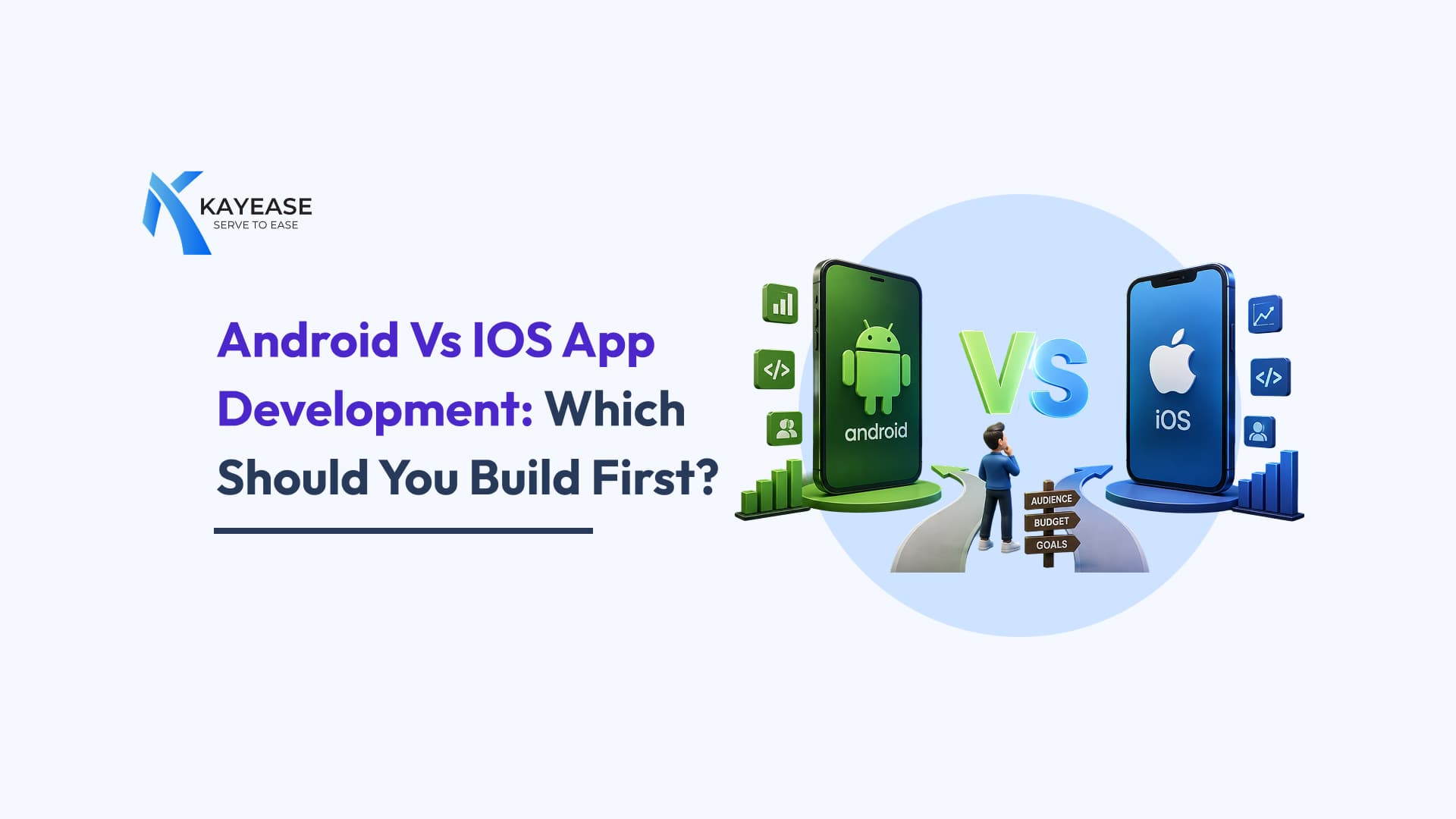
Android vs iOS App Development: Which Should You Build First?
Meet Rahul, A Business Owner from Jaipur
Rahul owns a growing furniture business in Jaipur. His Instagram page gets thousands of visitors every month, WhatsApp orders keep increasing, and now he wants to launch a mobile app. He contacts an app development company. The first question they ask is: "Would you like to build for Android or iOS first?. Rahul is confused. His friends tell him, "iPhone users spend more money. " Another says, "In India, everyone uses Android." Someone else suggests, "Build both together ."Rahul now has three opinions, but no answer. If you're in the same situation, keep reading.
First, Understand the Difference
Think of Android and iOS as two different highways leading to the same destination. Your app may look similar on both, but the people using them and their expectations can be quite different.
Android
Android powers smartphones from brands like Samsung, OnePlus, Xiaomi, Vivo, Oppo, Motorola, Realme, and many others. It dominates the Indian smartphone market because devices are available across almost every price range. Whether someone spends ₹8,000 or ₹80,000 on a phone, chances are they're using Android.
Android is ideal when:
- You want to reach the largest number of users.
- Your target audience is across Tier-2 and Tier-3 cities.
- You're building an ECommerce app.
- You're launching a delivery app.
- You're creating an education platform.
- You're targeting students or working professionals.
For most Indian startups, Android provides the widest customer reach from day one.
iOS
iOS powers Apple's iPhones. Although the number of iPhone users in India is much smaller than Android users, they often represent a premium customer segment. These users generally spend more on digital services, subscriptions, and online shopping. Businesses targeting luxury customers often prioritize iOS.
iOS is ideal when:
- Your audience includes business professionals.
- You're selling premium products.
- Your app uses subscriptions.
- You're targeting international markets.
- You're building SaaS or productivity apps.
If quality of customers matters more than quantity, iOS can be a smart first choice.
Android vs iOS: The Indian Reality
Let's be practical. Imagine opening a restaurant; would you open it inside a busy market with thousands of visitors...or inside a luxury hotel with fewer but higher-paying customers? Neither choice is wrong. They're simply built for different audiences. The same applies to mobile apps. If your business serves the masses, Android is usually the better starting point. If you're serving premium customers, iOS might generate better returns.
Comparing Android and iOS
Choosing between Android and iOS isn't about finding the "better" platform it's about choosing the one that aligns with your business goals.
User Base: If your priority is reaching the largest audience in India, Android has a clear advantage. It powers the majority of smartphones across the country, making it ideal for businesses targeting mass-market users. iOS, while having a smaller user base, attracts a more premium segment of customers.
Device Variety: Android apps need to work across hundreds of devices with different screen sizes, hardware, and software versions. In contrast, iOS runs on a limited range of Apple devices, making development and optimization more straightforward.
Market Reach: Launching on Android gives you immediate access to a much wider audience, especially in Tier-2 and Tier-3 cities. iOS offers a more focused reach among users who typically own premium smartphones.
Target Audience: Android is well-suited for businesses serving students, families, small businesses, and everyday consumers. iOS is often the preferred choice for brands targeting professionals, high-income users, or customers willing to spend more on apps and digital services.
Development and Testing: Because of Android's large number of devices, developers usually spend more time testing and ensuring compatibility. iOS development is generally simpler in this regard, thanks to Apple's smaller ecosystem of devices.
Revenue Potential: Although Android delivers more downloads due to its massive user base, iOS users often spend more on subscriptions, premium apps, and in-app purchases. If monetization is your primary goal, iOS can generate higher revenue per user.
Ultimately, the right platform depends on your customers not the popularity of the operating system. Understanding who you're building for will help you make the smartest decision.
Should You Build Both Platforms Together?
Many business owners think launching on both platforms is always the smartest move.
Not necessarily.
If you're a startup with limited resources, building both apps at once can significantly increase your development time and budget.
Instead, many successful startups follow a phased approach:
- Launch on one platform.
- Gather customer feedback.
- Improve the app.
- Expand to the second platform.
This reduces risk and helps you invest wisely.
What If You Have a Limited Budget?
This is where many Indian startups struggle.
The dream is to build a feature-rich app.
The reality is a limited budget.
Instead of spending everything at once, focus on creating an MVP (Minimum Viable Product).
An MVP includes only the essential features needed to solve your customers' primary problem.
After users begin using the app, you can gradually introduce advanced features based on real feedback.
This approach saves money and reduces unnecessary development costs.
Can Cross-Platform Development Solve the Problem?
Yes and that's why it's becoming increasingly popular.
Modern technologies like Flutter and React Native allow developers to build one codebase that works on both Android and iOS.
This means:
- Faster development
- Lower costs
- Easier maintenance
- Simultaneous launches
- Consistent user experience
However, highly complex apps such as gaming apps or applications requiring intensive hardware access may still benefit from native development.
The right choice depends on your business goals.
Questions Every Business Owner Should Ask Before Choosing
Before deciding between Android and iOS, ask yourself:
- Who are my customers?
- Which phone do they mostly use?
- Is my product mass-market or premium?
- Am I targeting India or international users?
- What's my budget?
- Do I need an app immediately, or can I launch in phases?
- Will my app need advanced native features later?
Answering these questions often makes the decision much easier.
Common Mistakes Businesses Make
Many businesses rush into development without a strategy.
Some common mistakes include:
- Choosing a platform based only on personal preference.
- Ignoring customer demographics.
- Trying to build every feature at once.
- Underestimating testing and maintenance.
- Skipping user feedback before expanding.
Avoiding these mistakes can save both time and money.
So... Which One Should You Build First?
There isn't a universal winner.
If your goal is to reach the maximum number of Indian users quickly, Android is usually the better choice.
If you're targeting premium customers, professionals, or international markets, iOS may offer stronger returns.
If your budget allows, a cross-platform solution can provide the best balance between cost and reach.
The smartest decision isn't about choosing Android or iOS.
It's about choosing the platform where your customers already are.
Build for them first.
Everything else can come later.
Final Thoughts
Choosing between Android and iOS isn't a technology decision it's a business decision.
The businesses that succeed aren't always the ones with the biggest budgets.
They're the ones that understand their customers before writing the first line of code.
So before asking,
"Which platform should I build first?"
Ask yourself something even more important:
"Where are my customers waiting for me?"
Because that's where your app should launch first.
Anchor Text Website Why It Helps
- Android Developers https://developer.android.com Official Android development documentation.
- Apple Developer https://developer.apple.com Official iOS app development resources.
- Flutter https://flutter.dev Official cross-platform development framework.
- React Native https://reactnative.dev Official React Native documentation.
- Google Play Console https://play.google.com/consoleLearn about publishing Android apps.
- App Store Connect https://developer.apple.com/app-store-connect/Official Apple app publishing platform.
- StatCounter Mobile Operating System Market Share https://gs.statcounter.com/os-market-share/mobile/india
- Current mobile OS market share in India.
- Data Reportal India Digital Report https://datareportal.com/reports/digital-2026-india
- Statistics on internet and smartphone usage in India.
- Google Material Design https://m3.material.io UI/UX guidelines for Android apps.
- Apple Human Interface Guidelines https://developer.apple.com/design/human-interface-guidelines/
- Official iOS design standards.
Never miss a post
Subscribe to our RSS feed and every new article lands in your reader automatically — no email, no algorithm.
Works with Feedly, Inoreader, NetNewsWire and any other reader. View raw feed